Custom bicycle manufacturer for high-performance road bike projects
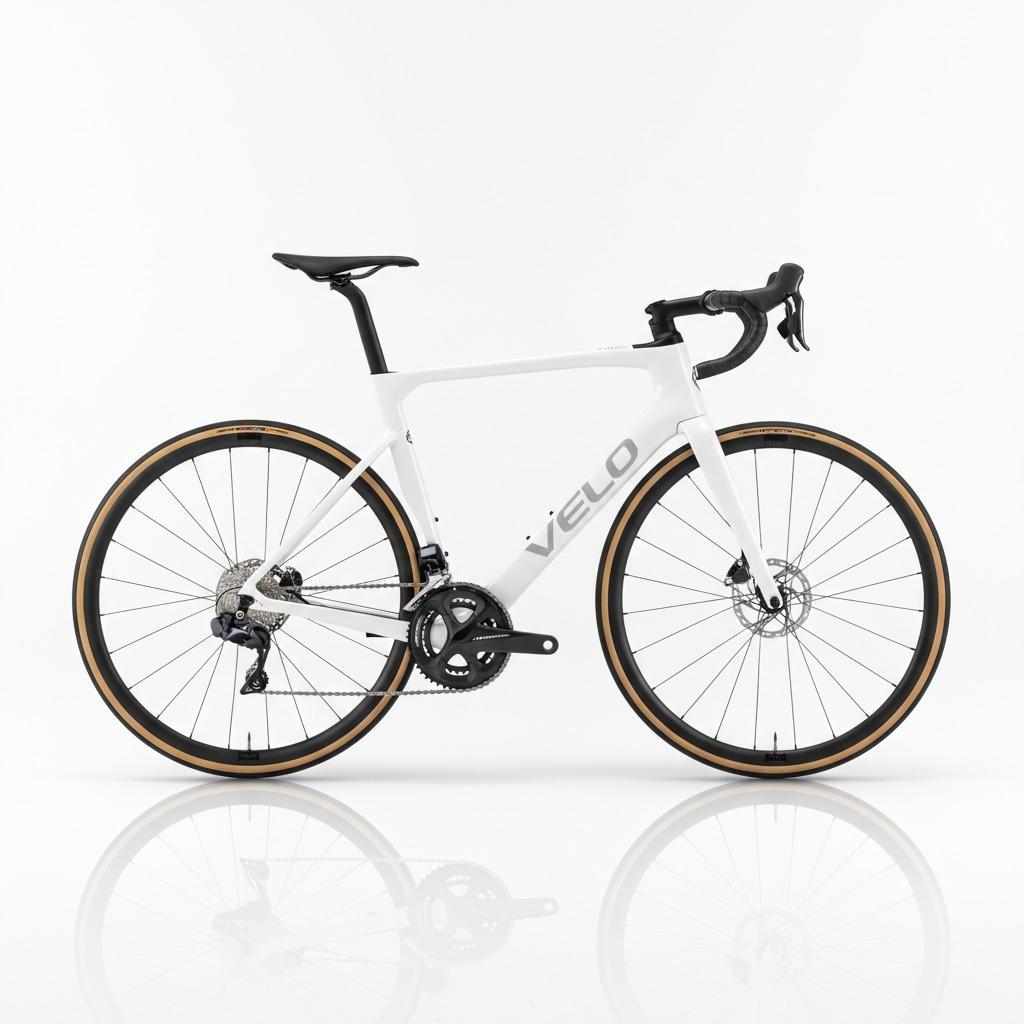
When buyers seek custom bicycle manufacturers, they typically try to solve a practical problem: how to find a bicycle that fits a specific riding purpose, market positioning, or brand image without sacrificing riding quality. For example, the road bike shown in the image, designed with speed, efficient rolling, and controllable braking on paved roads, is an important benchmark for brands that need a high-performance platform for training, club riding, fast commuting, or racing. Compared to general bicycle manufacturers, project-focused production partners can customize frame geometry, paint schemes, components, and packaging based on different riding groups and sales channels.
Product Overview: What does this road bike reference material imply?
The bicycle pictured is a drop handlebar road bike with a streamlined profile, narrow tires, disc brakes, and a dual-chainring drivetrain. These features clearly place it in the performance road bike category, rather than a comfort or practical one. The hardtail frame, sloping top tube, and one-piece seatpost indicate that its design prioritizes rigidity and airflow over suspension or load-carrying capacity.
This type of product is valuable for buyers evaluating OEM or ODM bicycle manufacturers because it presents a balanced business model: a familiar road bike layout, a modern braking system, and a high-end visual appeal. The white frame with black trim provides a clean foundation for private label production, while the tan tire sidewalls add a striking showroom look. Specific information regarding frame materials, rim materials, drivetrain brand, and weight is currently unavailable and will need to be confirmed during development.
Key Specifications and Visible Functions
Observed body shape characteristics
Several practical features are evident from the images. This bicycle features drop handlebars, supporting various grip positions and suitable for endurance riding and speed increases. Both front and rear wheels are equipped with disc brakes; this modern braking system provides stable braking performance in all weather conditions, making it popular among many cyclists. The drivetrain appears to be a dual-disc design, commonly used in road riding because it offers a wider gear ratio range and more precise cadence control. The slim slick tires reduce rolling resistance, further enhancing the bicycle's riding characteristics on paved roads.
The handlebars have a clean and sleek look, as evidenced by the black bar tape, brake/shifter levers, and the clean front design. The wheelset appears to prioritize performance, but the specific wheelset construction cannot be determined from the images alone. Compared to flat-bar city bikes or hybrid frames with suspension, this road bike configuration is more efficient in pursuing speed, reducing wind resistance, and providing agile handling.
Not yet confirmed
Do not overemphasize hidden specifications. The frame may be made of carbon fiber or other composite materials, but this cannot be determined from pictures alone. The same principle applies to wheel material, brake system type, tire width, gear ratio, and frame weight. Buyers should request drawings, specification sheets, and samples for verification before placing an order for production.
Materials, surface treatment and visual customization
For road bikes of this type, buyers typically compare carbon fiber, aluminum alloy, and composite frames based on their target price and performance needs. Each material affects the riding experience, manufacturing requirements, and appearance. Carbon fiber frames generally offer smoother tubing transitions and a more premium look, while aluminum alloy frames are better suited for consumers prioritizing cost control and impact resistance. Since the specific materials depicted in the images are unknown, they are for reference only and do not constitute a material declaration.
Custom bicycle manufacturers can create a distinct competitive advantage through a wide range of paint options. The color scheme shown in the image is predominantly white, accented with black branding and components. This scheme is ideal for private label production, as decals, logo placement, and accent colors can all be tweaked without altering the core platform. Available paint options include gloss, matte, spot clear coats, or two-tone patterns. For brands seeking a more distinctive retail image, wheel decals, fork patterns, and seat details can also be coordinated across the entire product line.
Manufacturing processes and OEM/ODM workflows
A typical bicycle development process begins with defining the intended use: for example, an endurance road bike, an entry-level training bike, a club racing bike, or a high-end aero road bike. Next, the manufacturer selects the frame geometry, tubing specifications, brake standards, drivetrain compatibility, and packaging requirements. As with all bicycle OEMs, communication during the prototyping stage is crucial, as even subtle variations in frame reach, stack, fork offset, or wheelbase can affect riding feel and assembly compatibility.
If a buyer wants private label manufacturing, ODM services can shorten development time by developing based on an existing road bike architecture. This approach is often practical when the market is already familiar with the product form. If the buyer requires a unique model range, custom bike manufacturers can further modify the platform by changing geometry, fiber layup strategies, paint schemes, component grades, or accessory mounting locations. Compared to purchasing off-the-shelf products, this approach offers greater control over branding and market positioning.
A typical production process includes frame manufacturing, surface treatment, painting or coating, component assembly, wheel installation, brake calibration, shifting adjustment, and final inspection. Where applicable, tolerance control and repeatability are crucial, especially for road bikes, as handling precision and drivetrain smoothness directly impact the user experience.
Application scenarios: Where is this bicycle best suited for use?
This bicycle model is designed for paved roads and prioritizes efficiency. Endurance riders will benefit from its drop handlebars and balanced geometry. Club riders and recreational racers will appreciate its narrow tires and responsive drivetrain. Commuters looking for a lightweight ride for long paved stretches and occasional acceleration can also choose this model. For dealers, when comparing bicycle manufacturers across different market segments, this road bike clearly falls into the performance category, rather than cargo, mountain, or urban commuter bikes.
Disc brakes are especially important for buyers selling in variable climates or hilly areas. While caliper brakes are still common on some road bikes, disc brake systems are generally more popular due to their greater braking adjustability and more stable performance on wet surfaces. Even so, the final choice should still be aligned with the maintenance habits, parts budget, and service network of the target market.
Quality control and buyer's guarantee
The assembly of road bikes requires exceptional care, as even minor alignment issues can affect shifting, braking, and riding stability. Key checks include frame alignment, headset smoothness, wheel roundness, disc brake clearance, crank and bottom bracket mounting, and front and rear derailleur accuracy. Reputable e-bike manufacturers may be known for their battery and motor validation, but for non-electric road bikes, the focus is on structural fit, surface finish quality, and component consistency.
Buyers should inquire with the factory about their procedures for incoming material inspection, in-process inspection, and final test ride. While appearance is important, repeatability, proper torque application, and consistent braking performance are even more crucial. If the item is intended for export, packaging strength and shipping protection are also important considerations, as the glossy frame and delicate components are susceptible to damage if not properly packaged.
Customized guidelines for different markets
Customization should be user-centric. Lightweight, high-performance versions might emphasize minimalist designs, narrower gear ratios, and a cleaner handling area. Comfortable road bike versions might feature a slightly more upright geometry, wider tires, or a more comfortable saddle. For entry-level retail products, simpler component configurations help maintain affordability while retaining the look of a racing bike. For the high-end market, integrated cable routing, higher-spec wheelsets, and more refined details enhance the product's appeal.
Brands should also consider whether they need to offer a unified platform for multiple regions or build different models for each market. In some cases, a single OEM bicycle manufacturer can produce multiple configuration levels based on the same frame series, which helps with inventory management and marketing. In other cases, when the characteristics of the target riders change significantly, an ODM bicycle manufacturer may recommend a more extensive redesign.
Comparison and contrast: Why this format stands out
Compared to flat-bar road hybrids, this drop-bar road bike offers more grip space and a lower front profile. Compared to mountain bikes, it rolls faster on paved surfaces and avoids the added weight and drag of suspension and off-road tires. Compared to urban commuter bikes, it sacrifices cargo-carrying convenience for speed and efficiency. It is these trade-offs that make this model still relevant for buyers who value both enthusiast riding and performance-oriented commuters.
For private label projects, this difference also applies to the business level. Standard catalog bicycles may be easier and quicker to source, but custom bicycle manufacturers offer greater flexibility to define their brand story, choose their paint scheme, and tailor their products to local preferences. This flexibility can determine whether a bicycle is mediocre or a premium product with a strong brand identity, ready for immediate market release.
How to evaluate suppliers before placing an order
Before placing an order, buyers should compare geometric dimensions, sample quality, parts availability, packaging methods, and after-sales accessory support. For new projects, request photos or videos of sample assembly. Confirm which features can be modified on the existing platform and which features require new molds. If the product roadmap includes multiple models, confirm whether the factory can expand from a road bike platform to adjacent model categories, such as endurance bikes, gravel bikes, or even the potential future expansion into e-bike manufacturing.
Furthermore, assessing communication speed and engineering responsiveness is also helpful. In bicycle procurement, small details such as cable routing, brake compatibility, and sticker placement can affect assembly time and retail presentation. Suppliers who can handle these details well are generally more valuable than those who only advertise production capacity.
Request a customized road bike solution
If you're developing a road bike product line, looking for your own brand of high-performance models, or comparing different options between OEM and ODM bike manufacturers, this platform is a practical starting point. Its design itself aligns with the speed-oriented demands of road riding, while also allowing for brand-specific geometry, paint schemes, and component grades.
Share your target market, rider demographics, and desired configuration level, and the factory can help you translate those needs into a viable product solution. For buyers who want a road bike with a clean, racing-inspired look, combined with personalized design and production consistency, the next step is to have detailed specification discussions and sample evaluations.