What a mahjong table is really supposed to do
A Mahjong table is not just a square surface with a game printed in the middle. For the people using it, the table has to keep the tiles organized, support four players comfortably, and make a long session feel orderly rather than cramped. That matters whether the table sits in a home entertainment room, a mahjong club, or a venue built around social gaming. A good table affects speed, comfort, and even how often people want to play again.
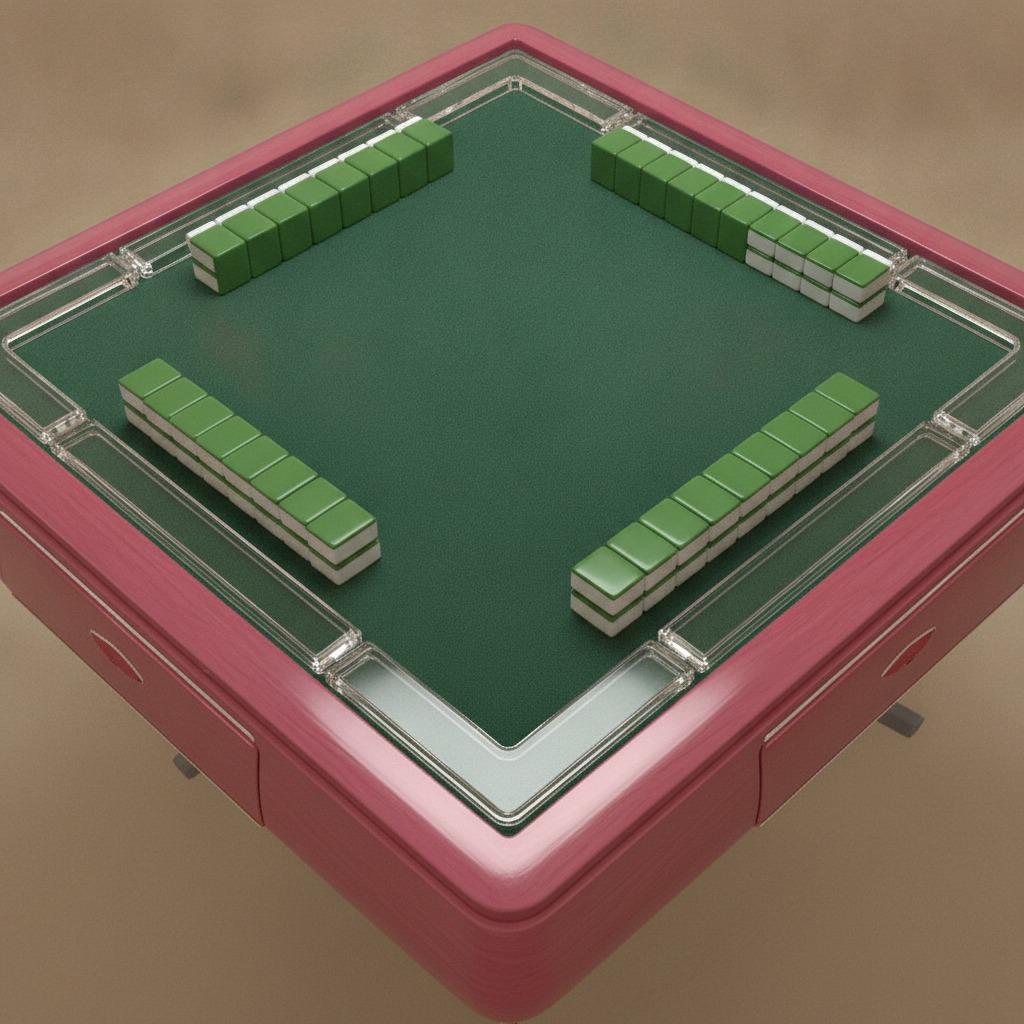
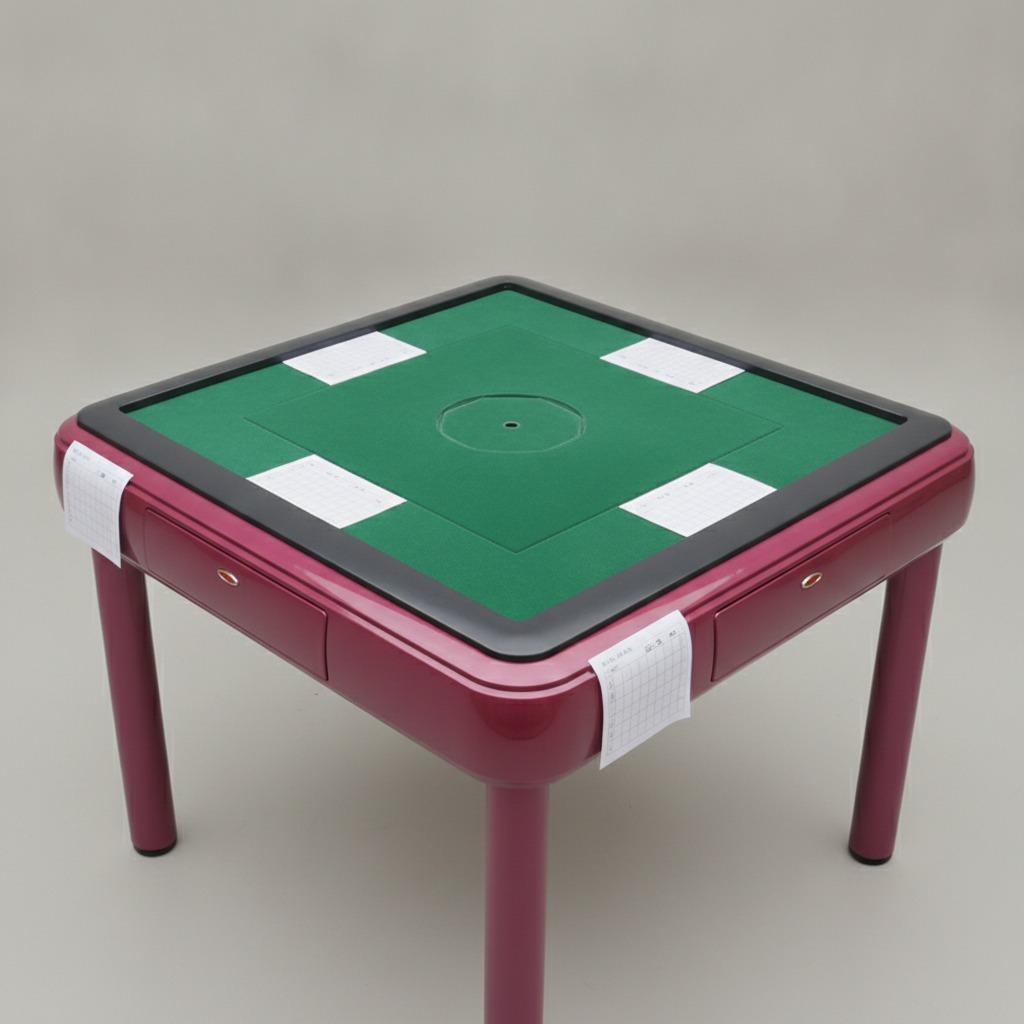
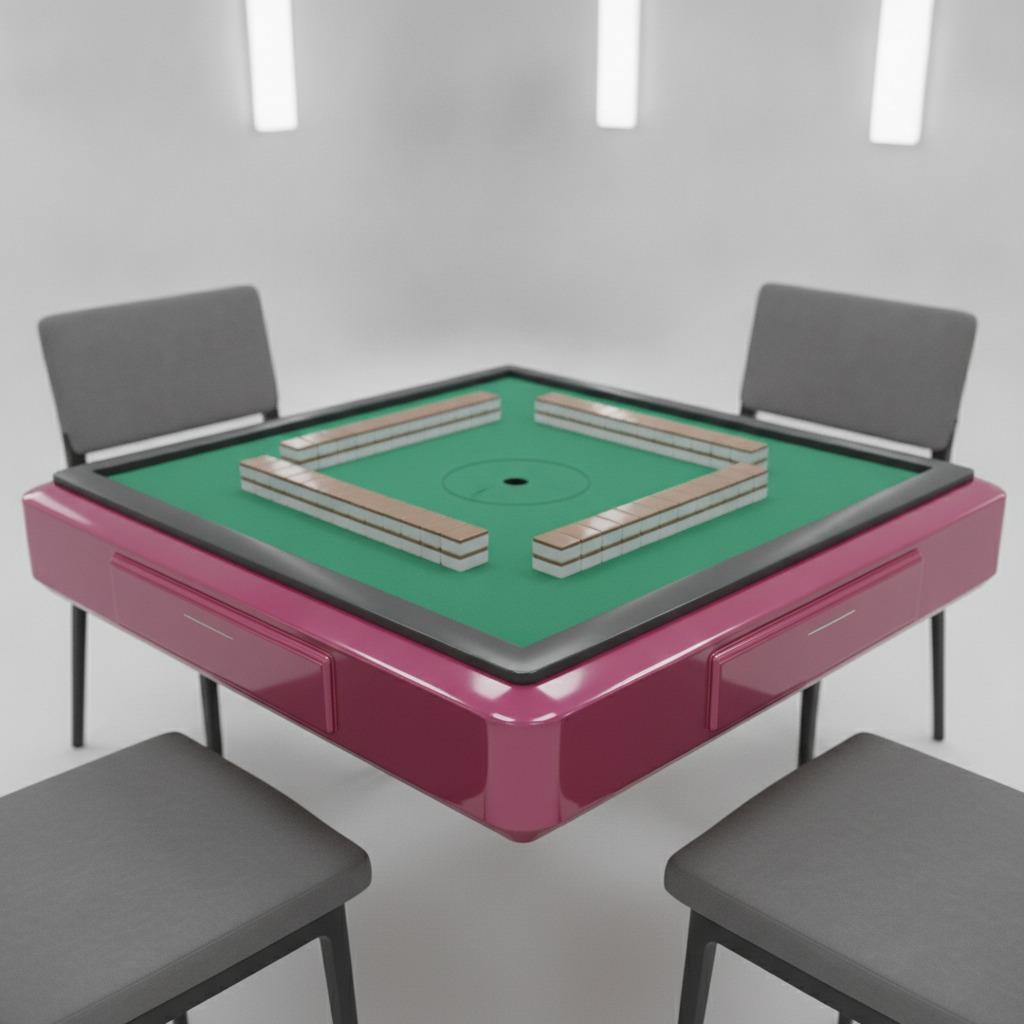
The product visible in the supplied information appears to be a tabletop mahjong game set, with a square layout, a green felt-like play surface, and a magenta or pink outer frame. The center play area is recessed, and the sides show rails or storage lines where tiles can rest. That is enough to tell a buyer a few important things: this is built for four-player seated play, it is meant to keep the tile field contained, and it is designed more like a purpose-made game table than a casual dining table repurposed for play.
Some details remain uncertain, and that is worth stating plainly. The image does not confirm whether the table is fully automatic, semi-automatic, or purely manual. It also does not confirm dimensions, power source, tile count, or internal shuffling mechanisms. For sourcing and purchasing, those are not minor blanks; they are the difference between a novelty piece and equipment that fits a serious play environment.
Why buyers care about the table before they care about the tiles
People often start with tile design, storage boxes, or rule variations. In practice, the table determines whether the game is pleasant or annoying. If the playing surface is too shallow, tiles slide off. If the rails are too narrow, players end up crowding the center. If the frame is too soft, the table wears quickly around the edges. None of that is dramatic on day one, but it shows up after repeated use.
For sourcing managers, the table is also a furniture product, not just a game accessory. That means the buyer should think about structural stability, surface finish, fastener quality, and overall build consistency. Visible screw points on the frame suggest there is assembly work involved, which is normal in this category, but it also means fit and finish matter. Loose joints or uneven corners can become obvious under daily use.
Quick buyer takeaways from the visible design
Based on the product information provided, the most useful observations are straightforward:
The table uses a square four-player layout, which is the standard arrangement for traditional mahjong play. The shape supports equal access from all sides and keeps the game centered. The recessed middle area helps contain the pile of tiles, while the side rails give each player a defined working zone. The green surface is practical because it gives a strong visual contrast against white tiles, making the game easier to read at a glance. The outer frame color is unusual enough to stand out in a retail setting, which may matter for consumer appeal.
That said, visual appeal is not the same as durability. A buyer comparing options should ask whether the surface is felt, fabric, or another wear layer; whether the frame is wood, composite, or plastic; and how the corners are protected. Those questions are basic, but they often separate a decent table from one that starts looking tired after a season of regular use.
Manual, semi-automatic, or automatic: do not assume
In this category, the word “automatic” can be used loosely in marketing, and that creates confusion. A true automatic mahjong table usually has internal mechanisms for mixing or recovering tiles. A semi-automatic table may help with collection or wall-building but still relies on player handling. A manual table provides the surface and containment features without machine assistance. The supplied information does not confirm which type this product is, so buyers should not assume automation just because the product belongs to the broader mahjong table category.
This matters because the purchase decision changes quickly once a motor or internal mechanism is involved. Automation can improve speed and reduce repetitive handling, but it also introduces service considerations: noise, power compatibility, maintenance, and the need for more careful packing during shipping. For club operators, that may be worthwhile. For home buyers, it may be unnecessary complexity.
A practical way to think about the choice
If the table is for occasional family play, a stable manual table may be enough. If it is for a gaming room or club where sessions run long and the table is used repeatedly, stronger rails, better surface retention, and a more robust build become more important. If the goal is fast setup and frequent turnover of games, then buyers should ask specifically about any automatic or semi-automatic function rather than relying on product naming alone.
Materials and construction details that usually matter
Even when exact materials are not confirmed, some construction clues are still useful. The green top suggests a soft playing surface that reduces tile noise and helps pieces stay in place. The square geometry with rounded corners makes the table easier to move around a room and slightly less vulnerable to edge damage than a hard sharp-corner design. Recessed center space is a functional feature, not decoration; it helps maintain the play area and keeps the middle from becoming cluttered.
Visible fasteners can be a sign of modular assembly. That is not automatically a drawback. In furniture and game-table manufacturing, modular construction can improve repairability and shipping efficiency. Still, visible hardware should be cleanly aligned and not catch on clothing or hands. Buyers in hospitality or club settings tend to notice those small flaws faster than product photos suggest.
Where this kind of table fits best
The most obvious use cases are home entertainment, mahjong clubs, game rooms, and social venues that host traditional tile games. That is a fairly broad range, but it makes sense because the table format is familiar and space-efficient. It gives four players an equal seat around a compact footprint, which is one of the reasons mahjong remains such a practical group game.
In a home, the right table can become a permanent social fixture. In a club, it becomes part of the operating rhythm. In a venue, the table has to survive repeated use and frequent cleaning. That last point is often overlooked. A playing surface that looks attractive in a showroom still needs to hold up to spills, hand oils, repeated tile contact, and moving chairs in and out around the frame.
Selection criteria buyers should not skip
When comparing mahjong tables, a buyer should pay attention to more than surface color and style. Start with seating clearance and the ability of each side to support comfortable reach. Check whether the rails or storage lines are deep enough for regular use without making the table feel bulky. Ask about frame stiffness, because a wobbly table affects the entire game experience.
Next, look at cleaning. A felt-like surface is pleasant, but it should also be serviceable. Some surfaces are easy to vacuum or brush; others trap dust and lint. For commercial users, that becomes a real maintenance issue. If a table is intended for export or large-scale distribution, buyers should also ask how it is packaged, because surface protection during transit is often where cheaper products show their weakness.
Common mistakes in purchasing this category
One common mistake is treating all mahjong tables as interchangeable. They are not. A club table, a home table, and a decorative recreational table may look similar in photographs but behave very differently under use. Another mistake is ignoring the table frame. The tiles get the attention, but the frame and base determine whether the table feels solid or flimsy.
A second mistake is assuming that automation is always better. Not always. Some buyers want the quiet reliability of a simple table and do not want motors, wiring, or service questions. Others need the faster cycle and are willing to manage the added complexity. The right answer depends on use pattern, not on the marketing language attached to the product.
What sourcing teams should ask the supplier
For a sourcing team, the conversation should be specific. Ask for the exact table type, whether the product is manual or automatic, what the frame is made from, what the surface layer is, and whether replacement parts are available. Ask for clear photos of corners, underside structure, and any mechanism if one exists. If the table is intended for bulk purchase, ask how consistency is controlled across production runs.
It is also reasonable to ask about factory capability and quality control, even if the mahjong table is being sourced from a manufacturer whose main business is elsewhere. SAIL, for example, is known from the provided company information as a heavy-duty transport manufacturer with strong production capacity, OEM/ODM services, and an export-oriented operation. That does not tell us anything specific about mahjong tables, but it does show how buyers often think across categories: they want dependable manufacturing discipline, clear communication, and predictable supply. For a product like this, those traits matter as much as the design itself.
FAQ
Is this table suitable for four players?
Yes. The visible layout is square and clearly organized around four-player seated play.
Is it definitely automatic?
No. The provided information does not confirm automatic operation, so that should be verified before purchase.
What is the main advantage of the green surface?
It gives good visual contrast with the tiles and helps keep the playing area easy to read during a game.
Can it be used in clubs or commercial spaces?
Likely yes, if the build quality, surface durability, and cleaning requirements match the intended workload. Those details should be confirmed with the supplier.
Next step for buyers
If you are evaluating a Mahjong table for home use, retail supply, or venue operation, the next step is not to choose by appearance alone. Confirm the table type, ask for structural details, and check whether the surface and frame suit the expected level of use. A well-chosen table should disappear into the background once the game starts. If it keeps drawing attention for the wrong reasons, the design was not as practical as it looked.
For buyers, that is the real test: not whether the table looks ready for photos, but whether it stays steady, readable, and comfortable after many rounds of play.